
crawling animation in a cave, pixilation workshop by Thomas Stellmach

Pixilation Workshop

Pixilation is a special form of stop-motion animation in which real people are animated frame by frame. Between individual camera shots, the performers gradually change their body positions or postures. When the individual frames are played back, they create the illusion of continuous movement.


What makes pixilation special is the combination of realistic images with unusual, often surreal movements. People can appear to glide effortlessly through space, suddenly disappear, or interact with animated objects in astonishing ways. This creates surprising, humorous, or absurd situations in which familiar reality is transformed.
Creating Movement and Expression

Especially for beginners, the workshop starts with an introduction to the creative possibilities of pixilation. Through film examples, participants discover unusual movements and animation effects. They then develop their own ideas and experiment with bringing them to life frame by frame.


Participants can explore facial expressions, body postures, and movement sequences. Even small changes can produce surprising and humorous effects. By adjusting the spacing and timing of movements, they learn to shape the expressive qualities of their animations.

Watch a pixilation animation exploring facial expressions and gestures.

Acting and Animation as a Team

In pixilation, performers create their own movements frame by frame, becoming animators themselves. They work closely with someone behind the camera who checks the framing, reviews the developing animation on the computer, and provides feedback on how the movements appear on screen.


Ideas emerge through collaboration. During the workshop, participants switch roles, gaining experience both in front of and behind the camera. This helps them develop movements through their own physical experience while also considering how they will appear to the audience.

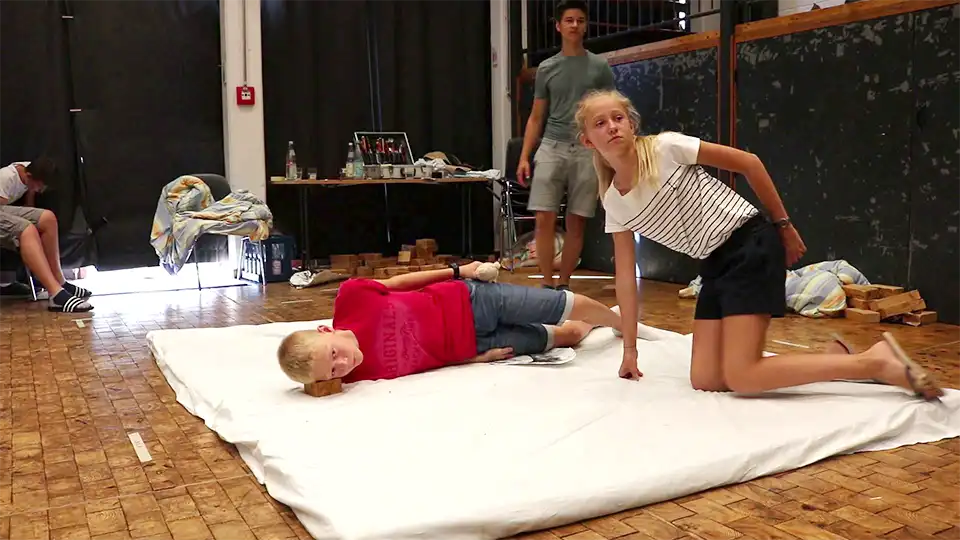
Young participants in a pixilation workshop: Two performers pose in different body positions on a white mat for a stop-motion animation.

Participants during a pixilation shoot.

Developing and Bringing Film Ideas to Life

The approach varies depending on participants’ experience and the duration of the workshop. Beginners often develop their ideas through experimenting with the technique, while more experienced participants may start with an existing film idea and plan how to bring it to life.


For more elaborate animations, movement sequences, camera angles, and props are prepared in advance. Careful planning is particularly important because performers sometimes need to hold certain positions for extended periods during frame-by-frame shooting.


Shorter workshops usually produce small animation experiments. Multi-day projects, on the other hand, offer opportunities to develop more complex scenes and combine them into a complete film.

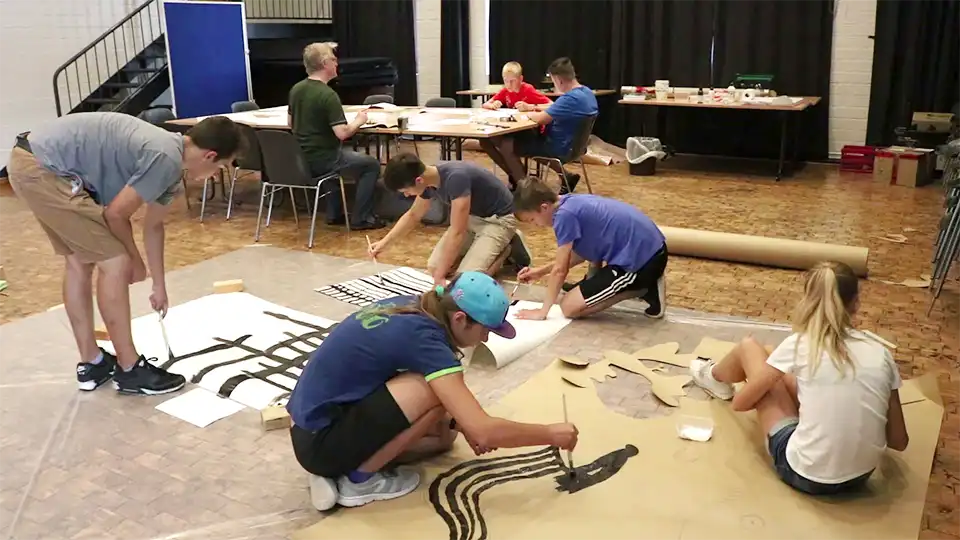
Young participants in a pixilation workshop paint large paper scenery elements for an animated film.

Creating the paper scenery together for Bettenwechsel.

Film Example: Bettenwechsel (Changing Beds)

During the multi-day Bettenwechsel workshop, seven national prize winners of the jugend creativ competition, aged 11 to 16, created a three-minute animated film about a child’s journey through dreams. They designed different dream worlds, painted and cut out paper characters and scenery, and animated them frame by frame alongside the performers.


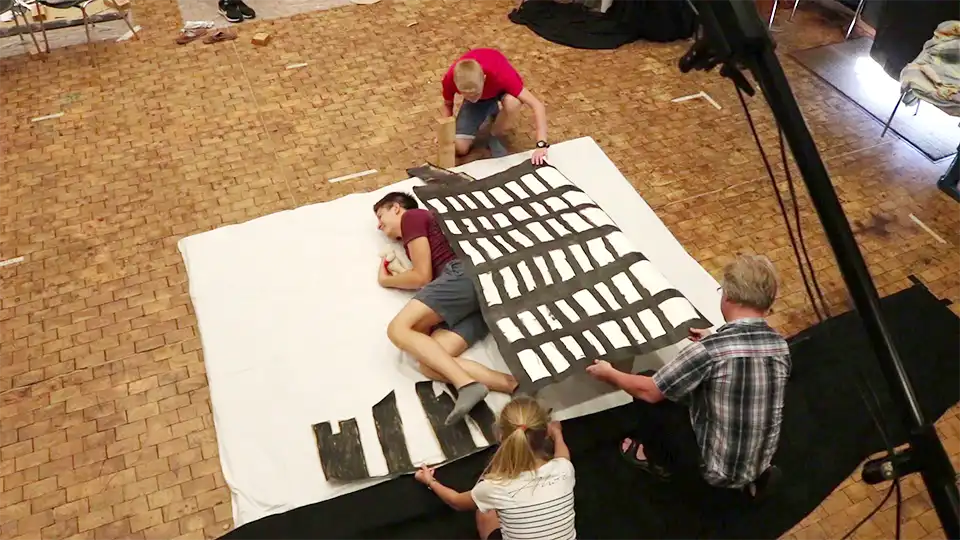
The camera was positioned vertically above the film set. The performers lay on the floor, changing their body postures and positions between shots. Combined with the animated paper scenery, this created fantastic movements and unusual visual worlds.


The film combines pixilation with cut-out animation, demonstrating how both techniques can be used to tell a story. The elaborate paper scenery and unusual camera setup were developed specifically for this project.

Overhead view of a pixilation film shoot: Participants animate a large paper backdrop around a performer lying on the floor.

Frame-by-frame shooting for Bettenwechsel with animated paper scenery.

Bettenwechsel – animated film created during a five-day workshop

Making-of film by Simone Klar

Learning Objectives at a Glance

Participants learn to:


  • develop their own ideas for unusual movements and visual effects,
  • use facial expressions, body language, and movement sequences creatively in animation,
  • break movements down into individual frames and control their timing and rhythm,
  • evaluate the effect of body postures and movements from the camera’s perspective,
  • use cameras and animation software for frame-by-frame shooting,
  • take on different roles in front of and behind the camera,
  • plan scenes and bring them to life collaboratively in more extensive projects,
  • explore film editing and sound design, depending on the workshop concept.

Workshop Format

The pixilation workshop can be offered as a one-day event or a multi-day film project. The duration, group size, and scope of activities are adapted to the participants’ needs and the workshop’s objectives.


Whether film editing and sound design are included, and which tasks participants undertake themselves, is agreed upon in advance, taking into account the available technical equipment and their previous experience.

Workshops in other Animation Techniques

Links

Small Talk – A Pixilation Short Film by Thomas Stellmach


A professionally produced animated film in which real performers and animated objects interact in humorous and surreal ways.

References

Take a look at my customers.

Contact Form

Please use the following contact form to send me further details about your enquiry: