
Stop motion workshop held by THOMAS STELLMACH

Stop-Motion Workshop

In my stop-motion workshop, participants create their own animated films using everyday objects, plasticine figures and other materials. They change the position or shape of the objects step by step, photographing each change with a camera. When the individual frames are played back in sequence, the illusion of movement is created.


The possibilities range from simple animation exercises and experimental techniques to short animated stories.
A compilation of animations created during my workshops at the summer academy for the national prize winners of the jugend creativ competition.

Content

First Stop-Motion Experiments

Even simple exercises can demonstrate how animation is created from individual frames. Participants move objects step by step or gradually create a drawing by adding lines and shapes. When the frames are played back, the objects appear to move on their own or the drawing seems to emerge by itself.

Simple animation exercises using everyday objects and drawings that gradually come to life.

Experimenting and Telling Stories

Plasticine can be used to create figures and objects in a wide variety of shapes. Participants can explore different movements, experiment with shapes and rhythm, or tell short stories.


The following compilation features animations created during my workshops at the summer academy for the national prize winners of the jugend creativ competition, organised by the German Volksbanken and Raiffeisenbanken. It combines experimental animation loops with short animated stories.

Creating Characters and Film Sets

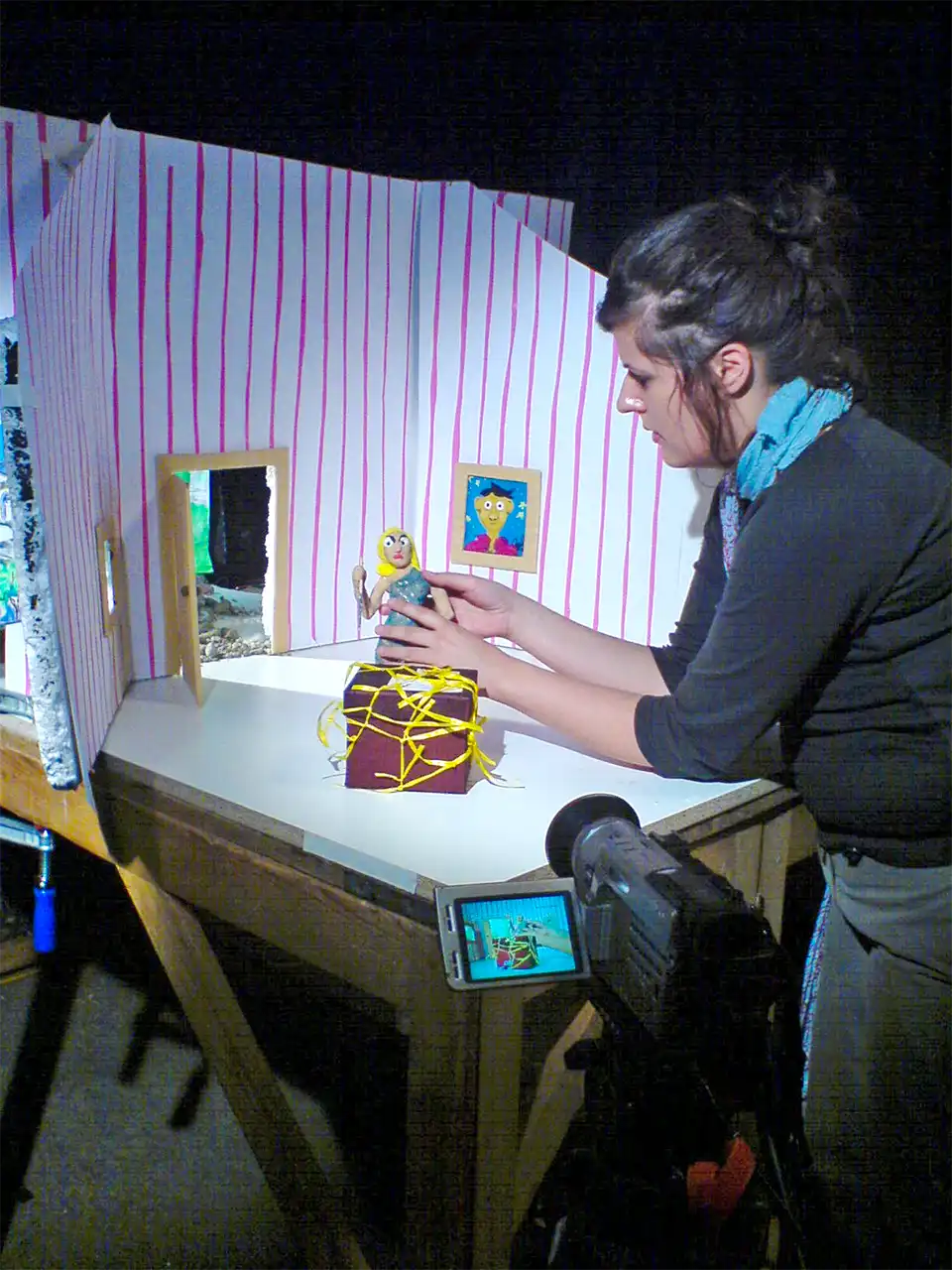
Participants model characters and objects from plasticine or work with existing objects. They create backgrounds and scenery and prepare their film sets for shooting.


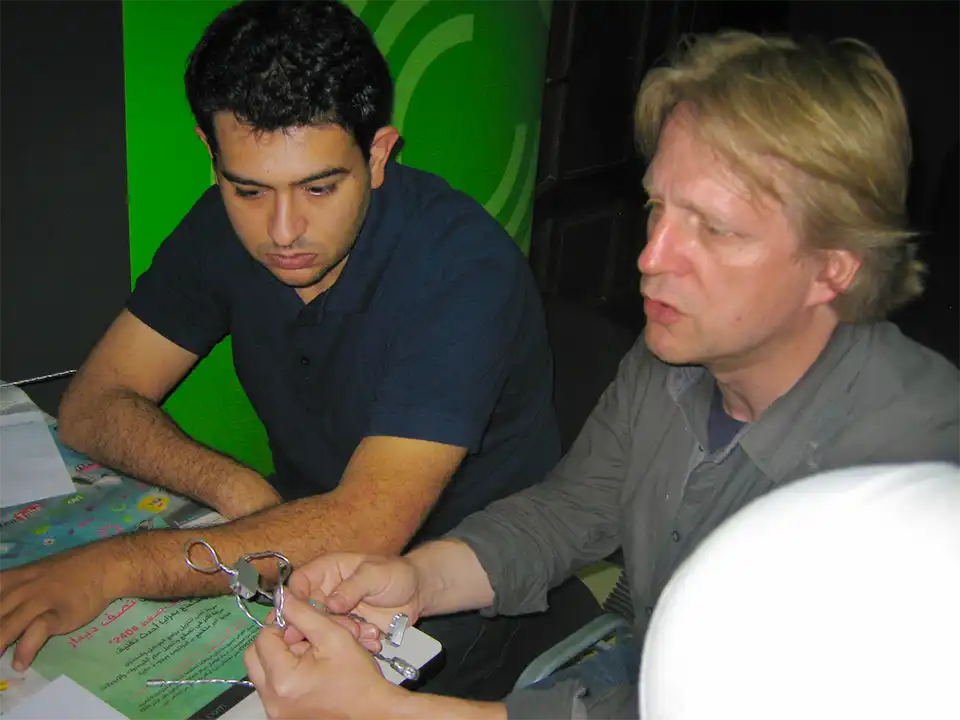
For more elaborate productions, characters can be built around wire armatures. These provide stability and allow their poses to be adjusted precisely.


Lighting and camera position also influence the appearance of the animation. Participants learn how to stage their characters and objects effectively.

I explain how to construct a wire armature for a stop-motion character.

Participants create characters and scenery for their stop-motion film.

Simple animation exercises using everyday objects and drawings that gradually come to life.

A participant prepares a miniature film set for stop-motion animation.

Creating Movement and Expression

During animation, participants adjust the position or pose of their characters and objects between individual frames. They explore how the size of each movement, as well as timing and rhythm, influences the resulting animation.


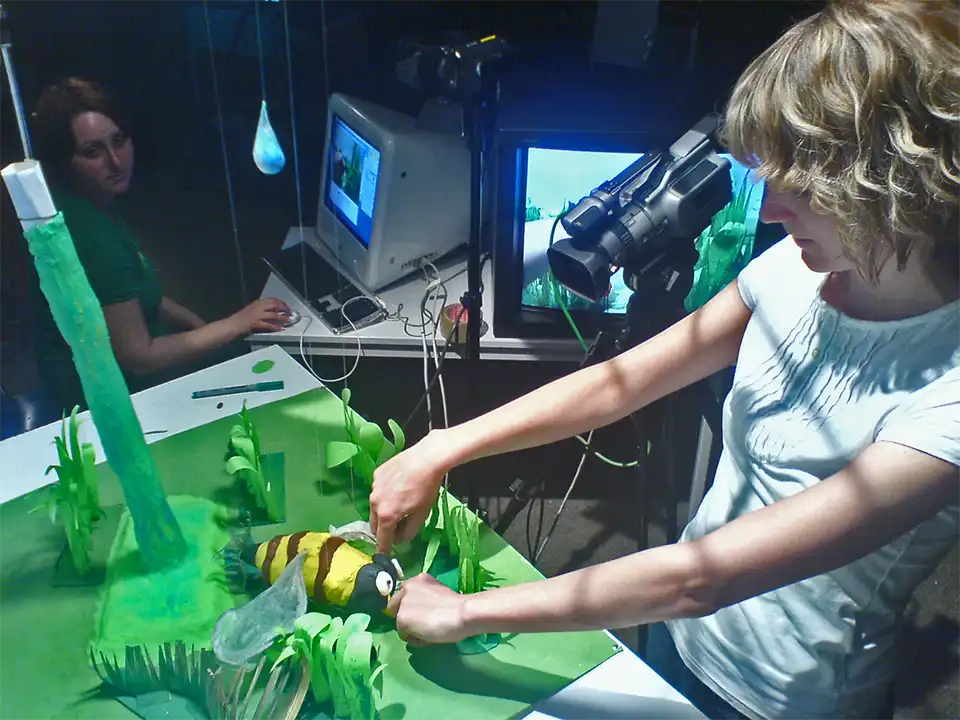
They can play back and review their recordings on a computer. This allows them to see immediately how their animation works and make adjustments as they continue filming.


Expression is also important in character animation. Even small changes in posture can convey different emotions or reactions.

Developing and Realising Film Ideas

In more extensive workshops, participants develop their own film ideas or work from concepts they have already prepared. They plan the action, create the necessary characters and scenery, and animate their scenes frame by frame.


The recorded scenes can then be edited on a computer and enhanced with sound effects, dialogue or music.

Animating on set and reviewing the animation on a computer

Films from Multi-Day Workshops

A Cappella – Kunsthochschule Kassel

The animated film A Cappella was created as part of a five-day stop-motion workshop at Kunsthochschule Kassel. The participants also worked on their film outside the scheduled workshop sessions. This enabled them to realise a more elaborate film idea than would have been possible during the workshop sessions alone.

A stop-motion film created during a workshop at Kassel College of Art.

Biene Blume – University of Television and Film Munich

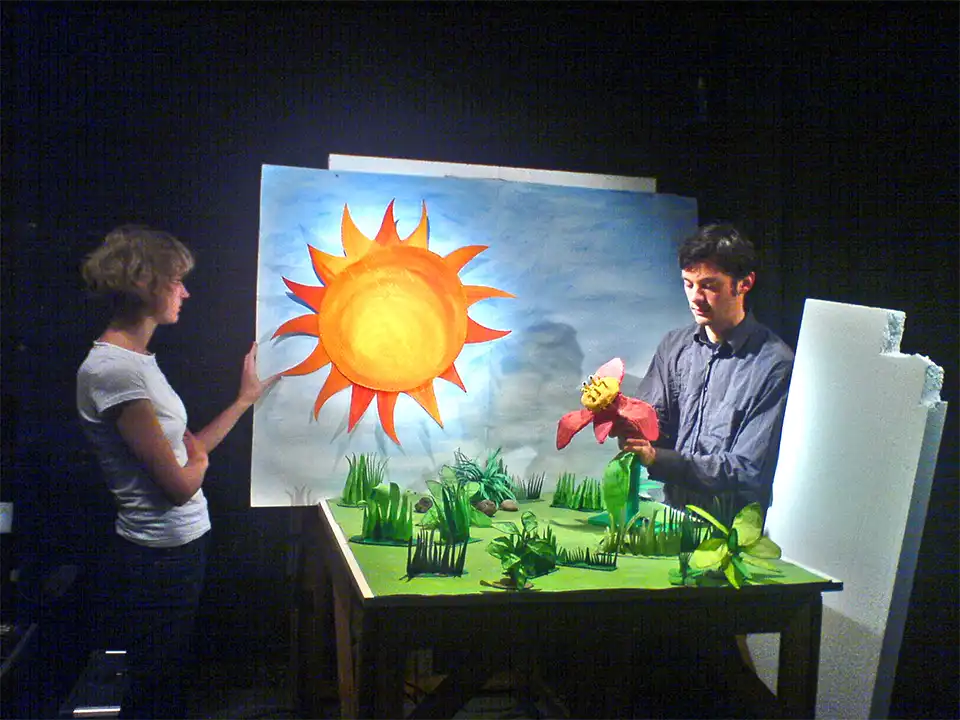
The animated film Biene Blume was created as part of a four-day stop-motion workshop at the University of Television and Film Munich (HFF).


The film students arrived with their film idea already prepared and created the animated characters and film sets themselves during the workshop. They also continued working on their film outside the scheduled workshop sessions.

A stop-motion film created during a workshop at the University of Television and Film Munich (HFF).

Possible Workshop Topics

  • Understand the basic principles of frame-by-frame animation
  • Animate objects and characters step by step
  • Experiment with movement, timing and rhythm
  • Model characters and objects using plasticine
  • Build scenery and film sets
  • Develop film ideas and stage scenes
  • Use cameras and lighting for frame-by-frame photography
  • Review animations on a computer and, where appropriate, edit them further

Workshop Format

The duration and structure of the stop-motion workshop can be adapted to the group and the practical requirements of the organiser.


For school classes and groups with no previous experience, simple animation exercises and short film experiments provide an accessible introduction. In multi-day workshops, participants can create their own characters and film sets and develop more elaborate film ideas.


Workshops can also be tailored to film students and other participants with previous experience, allowing more advanced creative and filmmaking challenges to be explored.


I discuss the programme, group size and technical equipment requirements with the organisers in advance.

My Oscar®-Winning Animated Film QUEST

In my Oscar®-winning short film QUEST I worked with three-dimensional characters and stop-motion animation. The film demonstrates the creative and storytelling possibilities of this animation technique.

Other Animation Workshops and Practical Information

On my overview page, you’ll find information about the different animation techniques, workshop duration, group size, technical equipment and how the costs are calculated.


Animation Workshops: Options and Practical Requirements at a Glance

References

Take a look at my customers.

Enquire about a Workshop

If you would like to organise an animation workshop, please describe your ideas, requirements and circumstances as accurately as possible in the contact form below.


Information about the participants, workshop duration, desired outcomes, and available organisational and financial resources will help me assess which workshop is suitable for your event and feasible under the given conditions.


If some details have not yet been decided, you can indicate this in the form.