In the cut-out animation workshop, participants develop their own film ideas and turn them into animated short films. They learn about the different stages of film production – from designing characters and animating them to completing the finished film.

Cut-Out Animation Workshop
What Is Cut-Out Animation?
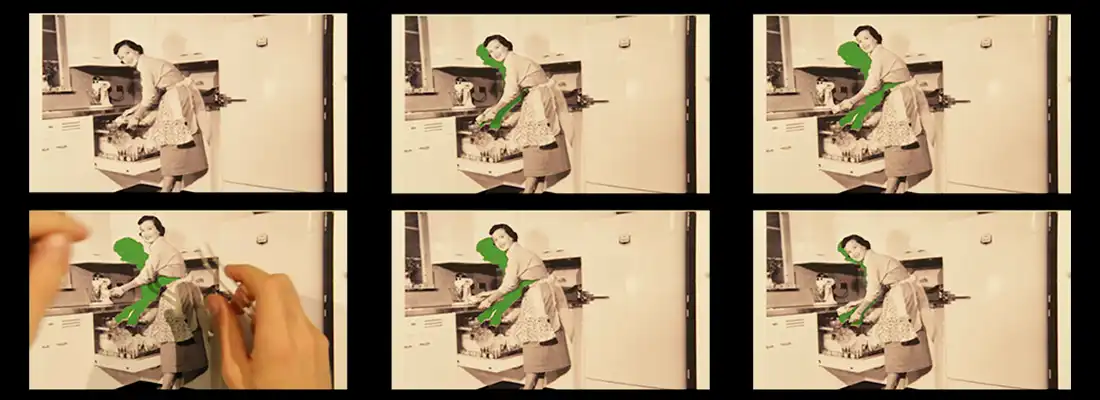
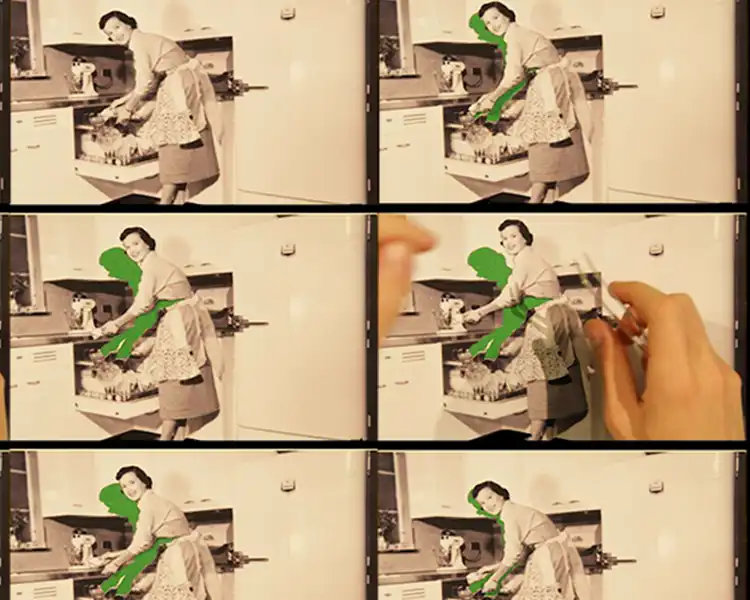
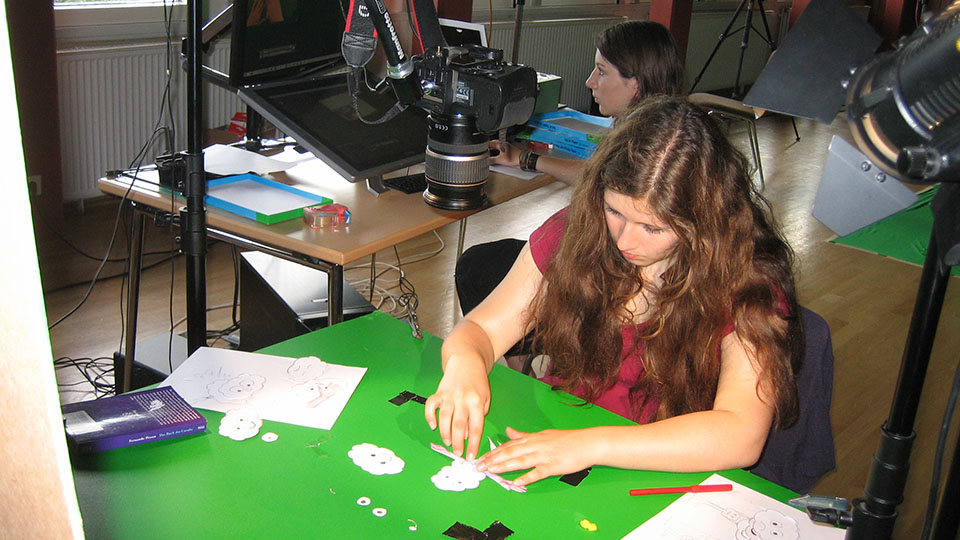
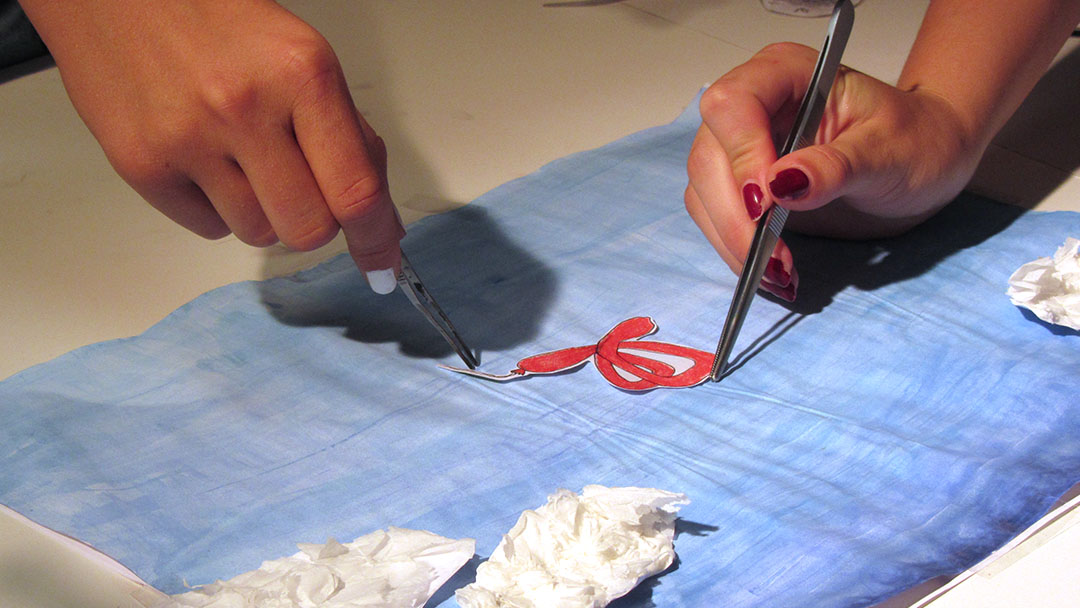
In cut-out animation, paper characters and other flat visual elements are arranged on a horizontal work surface and moved step by step. A camera positioned above the work surface captures each change as a separate frame. When these frames are played back in rapid succession, they create the illusion of fluid movement.
In addition to hand-drawn characters and backgrounds, photographs, newspaper clippings and other visual materials can also be used. This opens up a wide range of creative possibilities, even for participants without advanced drawing skills.
Workshop Duration and Group Size
At least eight to ten workshop hours should be planned for the production of an animated short film. The time required depends on the group size, the participants’ previous experience and the scope of the film project.
I recommend a group size of around 15 participants. Workshops with larger groups or entire school classes are also possible. However, these require adjustments to the workshop concept, additional supervisors and, if necessary, more technical equipment.
Idea Development and Preparation
Individual participants or groups can develop film ideas before the workshop and elaborate on them in the form of scripts, sketches or storyboards. I am happy to review their drafts in advance and provide feedback.
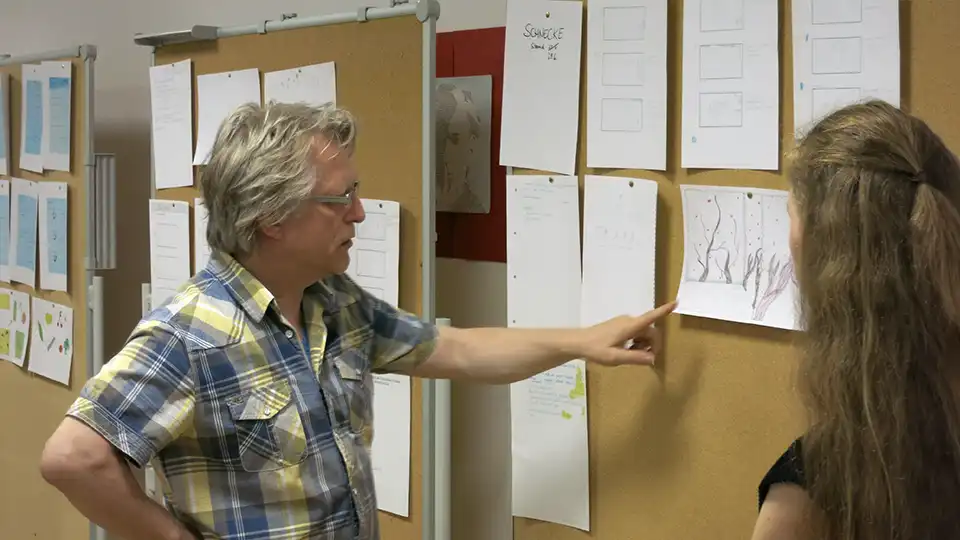
At the beginning of the workshop, the proposals are discussed and selected based on the prepared sketches or storyboards. With my support, participants then develop the storyboards for the film production.
Depending on the group size and available technical equipment, several film ideas can also be produced simultaneously. If the ideas are developed during the workshop itself, additional time must be allocated. The time required depends on the complexity and scope of the planned films.
Teamwork and Directing
Depending on the group size and film project, participants work independently or in small production teams. They take on different roles, such as directing, character and background design, animation, camera operation, film editing, or sound and music production. In group projects, they can also switch between different roles.
Whenever possible, participants who contribute a film idea also take on the role of director. This involves planning the film’s production, making creative decisions and, in group projects, coordinating teamwork. Creative questions are discussed within the film team. Those responsible for directing learn how to bring discussions to a conclusion and keep the film production moving forward.
Throughout the production process, I guide participants as a supervisor and support them with creative and technical questions. I explain my suggestions for improvement and discuss them with the participants. They make the final decisions themselves.
From Storyboard to Animated Film
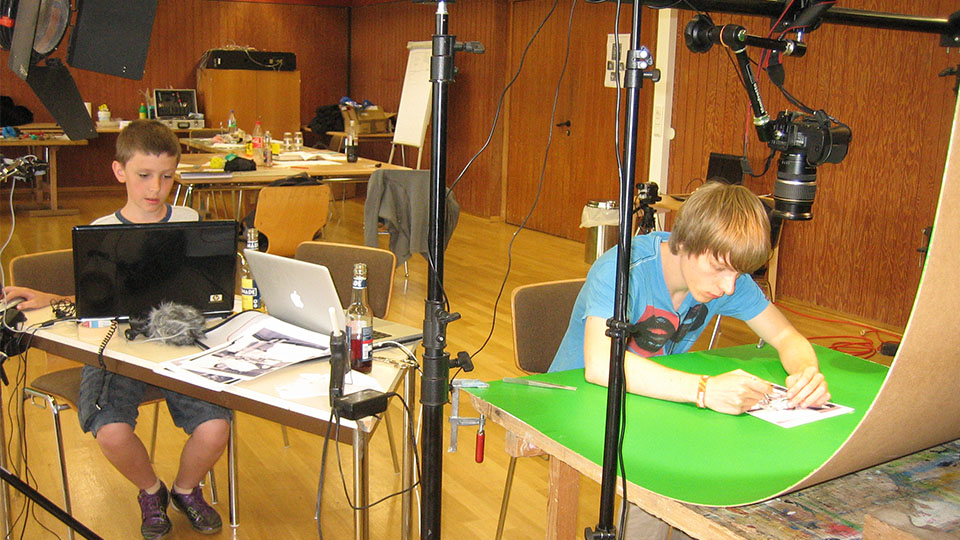
Based on their storyboards, participants design characters and backgrounds and prepare the individual scenes for animation. The cut-out characters are moved frame by frame on the work surface and photographed using a camera, tablet or smartphone. With stop-motion software, participants can immediately watch their animations in motion, review them and make improvements where necessary.
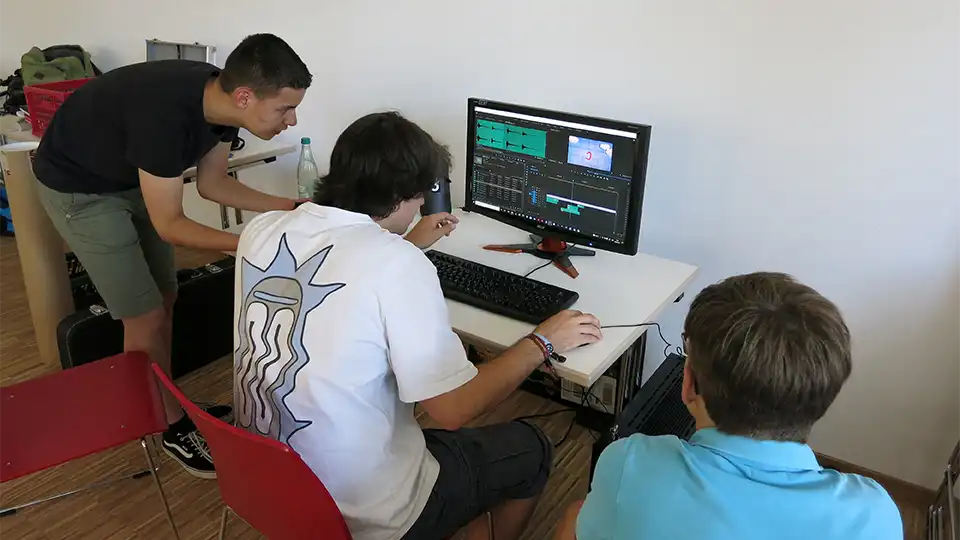
The recorded scenes are then edited together on a computer to create a film. Depending on their previous experience and the editing software used, participants may be able to carry out this step themselves. Depending on the available workshop time and the requirements of the film project, sound effects, dialogue or music can also be added to the film.
Presentation and Discussion
At the end of the workshop, the completed films should, whenever possible, be watched and discussed together. Participants can present their work, explain their creative decisions and share their experiences of the film production process.
Depending on the circumstances, the films can also be presented to an audience.
Examples of Films from my Workshops
CHANGE – A short film created at a workshop at Ludwigsgymnasium Straubing
A film created during a four-day workshop at the Hanau Youth Educational Institute.
A film created during a five-day workshop for the national prize winners of youth creativ
What Participants Will Learn
- Develop film ideas and plan them using storyboards
- Design characters and backgrounds
- Animate movements and capture individual frames
- Direct films and make creative decisions
- Become familiar with different roles in film production
- Learn about film editing, including the creation of opening titles and end credits
- In group projects: collaborate and coordinate within a film team
- Depending on the scope of the workshop: incorporate sound effects, dialogue and music
- Whenever possible: present films and discuss them together
Workshops in other Animation Techniques
More Information
- Take a look at my customers.
- Read a report about such a cut-out animation workshop at the Ludwigsgymnasium (Ludwig Grammar School) in Straubing.
Contact Form
Please use the following contact form to send me further details about your enquiry: