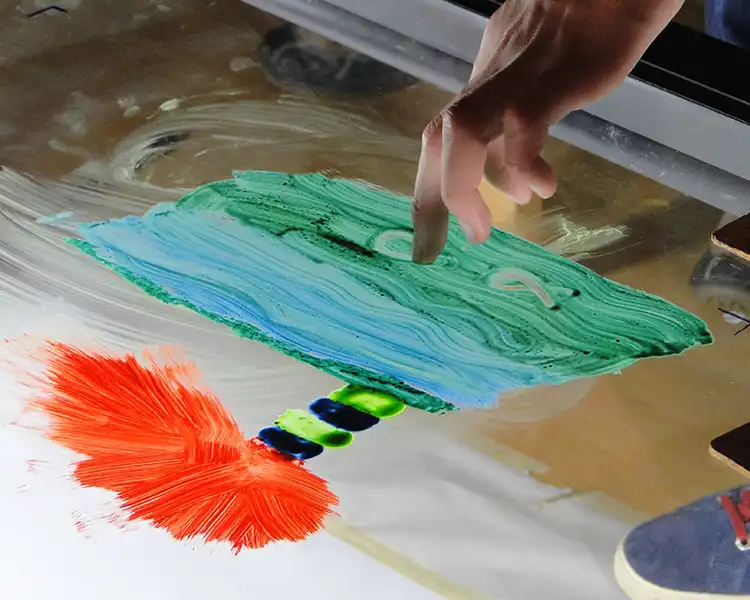
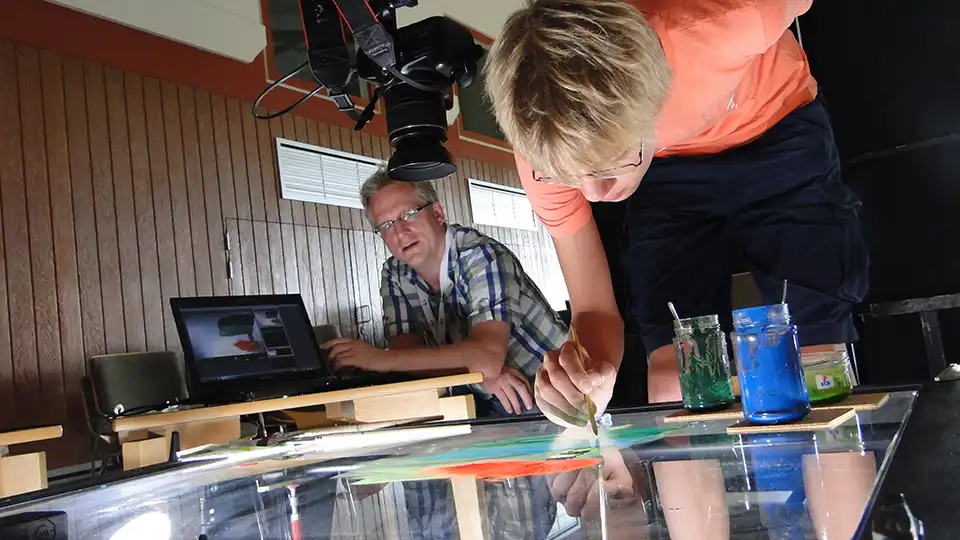
In this paint-on-glass animation workshop, participants create their own animated films by painting directly onto a glass surface using non-drying paint. Unlike traditional hand-drawn animation, this technique does not require a new drawing for every frame. Instead, participants gradually modify the existing image, capturing each change with a camera. When the individual frames are played back in sequence, they create the illusion of movement.
Using brushes, fingers and other tools, participants can transform figures and shapes, smudge colours and blend one image into another. This allows for fluid transformations (morphing) and a wide range of painterly animation effects.
At the beginning of the workshop, participants prepare their own paints using pigments and glycerine. As these paints do not dry, the images can be repeatedly altered, extended or partially removed.
Through free experimentation with the paint, participants discover new creative possibilities. This often leads to unexpected results that inspire ideas for their animations.
Participants develop their own film ideas, working individually or in small groups. Ideas can be planned in advance, but often evolve spontaneously during the painting and animation process.
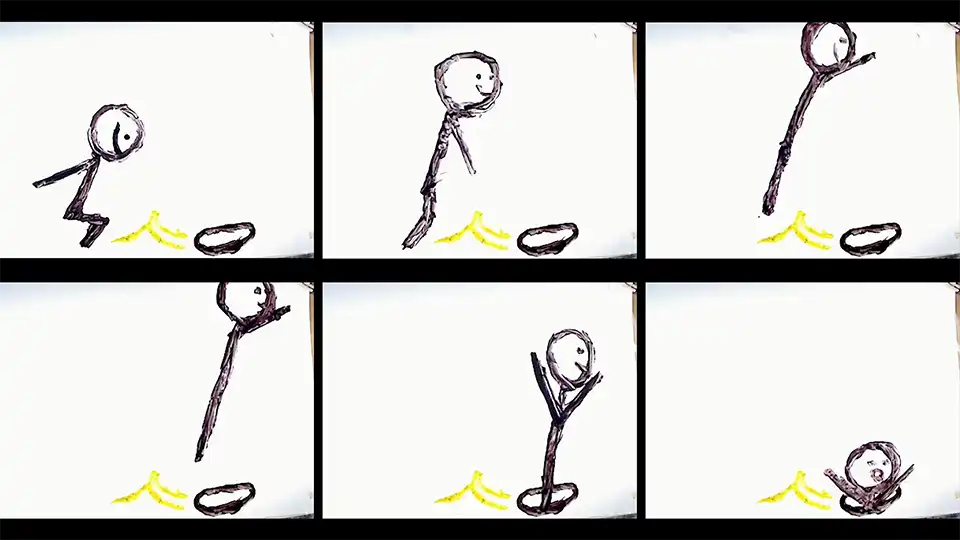
Participants learn to break down movements into individual phases and consciously shape their timing and rhythm. They can immediately play back their animations, review the results and refine their work.
I guide participants throughout this process, discuss their film ideas and help them overcome artistic and technical challenges. For example, I demonstrate physical movements and show how these can be translated into animation.
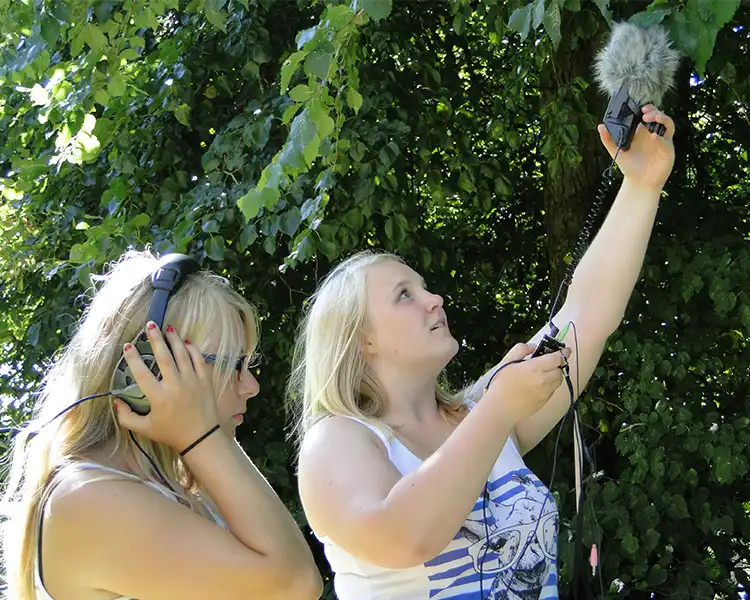
Participants work together in small groups at three animation stations. While one or two people modify the images on the glass surface, another operates the computer and captures the individual frames. A fourth person can begin recording suitable sound effects together with other participants while the animation is still in progress.
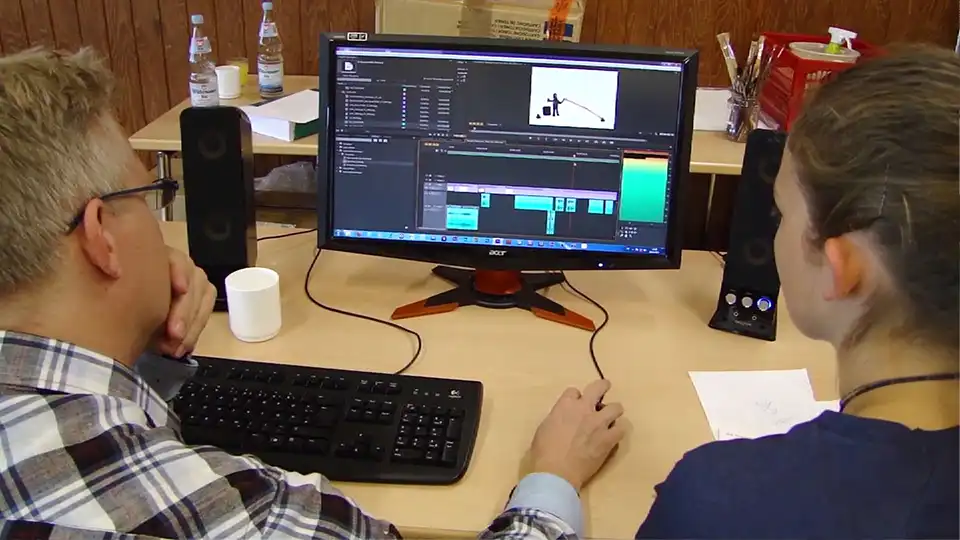
Afterwards, the recorded scenes are edited and combined with sound effects, dialogue or music. Depending on their previous experience, participants carry out these steps themselves with my guidance and support.
Making-of: A look behind the scenes of the workshop
Film by Simone Klar
Animated films created during a five-day workshop
Participants learn how to:
- prepare and creatively use non-drying paints,
- develop their own film ideas and bring them to life visually,
- break down movements into individual frames and control their timing,
- experiment with smearing, blending and morphing effects,
- use cameras and animation software for frame-by-frame recording,
- collaborate on animated films,
- edit their footage and add sound.
Duration: Five days
Number of participants: A group of 9 to 12 participants is recommended.
Workstations: Three animation stations, each equipped with a glass surface, camera and computer. Participants work together in small groups.
Previous experience: An interest in painting and visual art, along with basic drawing or painting skills, is desirable. No previous experience in animation is required.