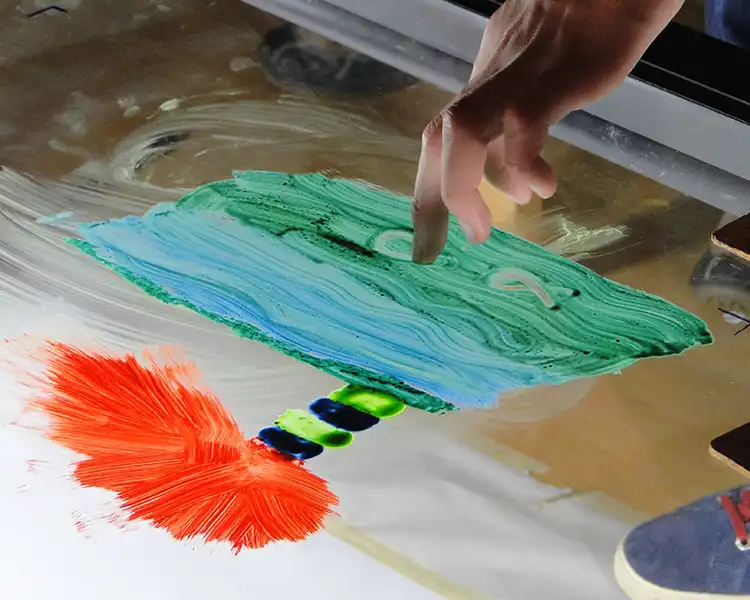
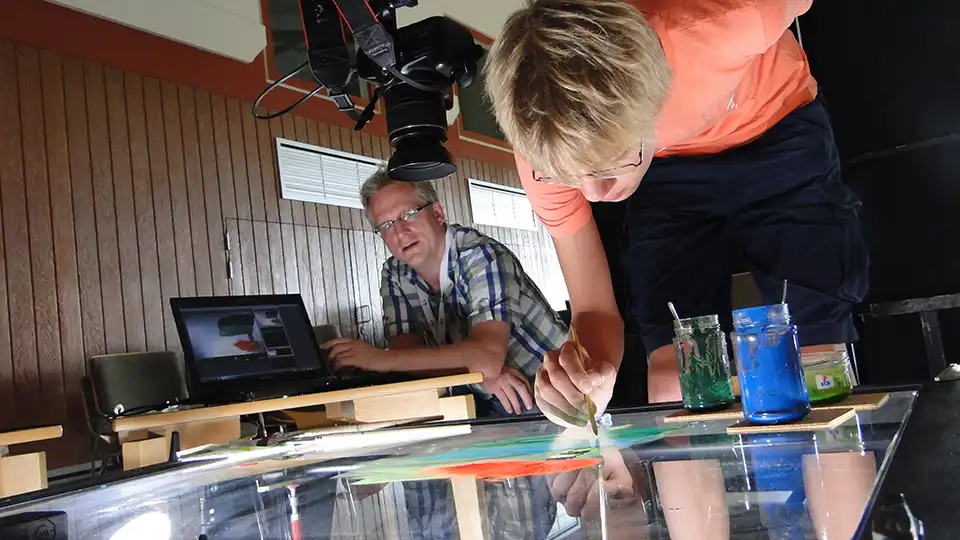
At the beginning of the workshop, participants prepare their own paints using pigments and glycerine. As these paints do not dry, the images can be repeatedly altered, extended or partially removed.
Through free experimentation with the paint, participants discover new creative possibilities. This often leads to unexpected results that inspire ideas for their animations.
Other materials can also be used instead of paint, such as sand, thinly spread plasticine or coloured transparent films. When illuminated from below, these materials reveal different textures, structures and colours, opening up further possibilities for animation.
Participants develop their own film ideas, working individually or in small groups. Ideas can be planned in advance, but often evolve spontaneously during the painting and animation process.
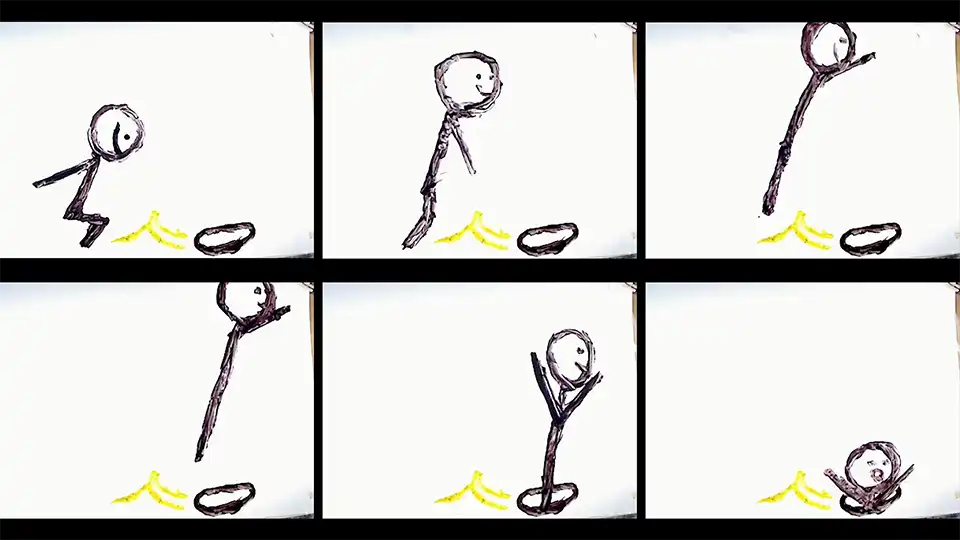
Participants learn to break down movements into individual phases and consciously shape their timing and rhythm. They can immediately play back their animations, review the results and refine their work.
I guide participants throughout this process, discuss their film ideas and help them overcome artistic and technical challenges. For example, I demonstrate physical movements and show how these can be translated into animation.
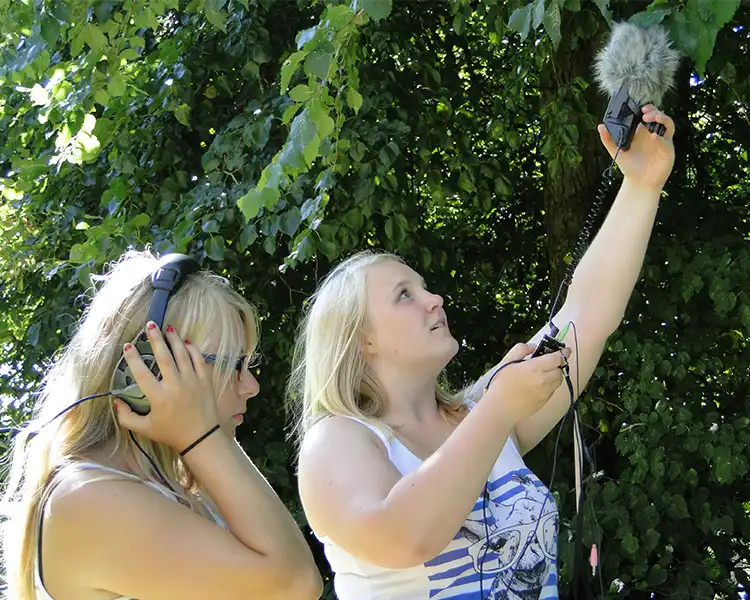
Participants work together in small groups at three animation stations. While one or two people modify the images on the glass surface, another operates the computer and captures the individual frames. A fourth person can begin recording suitable sound effects together with other participants while the animation is still in progress.
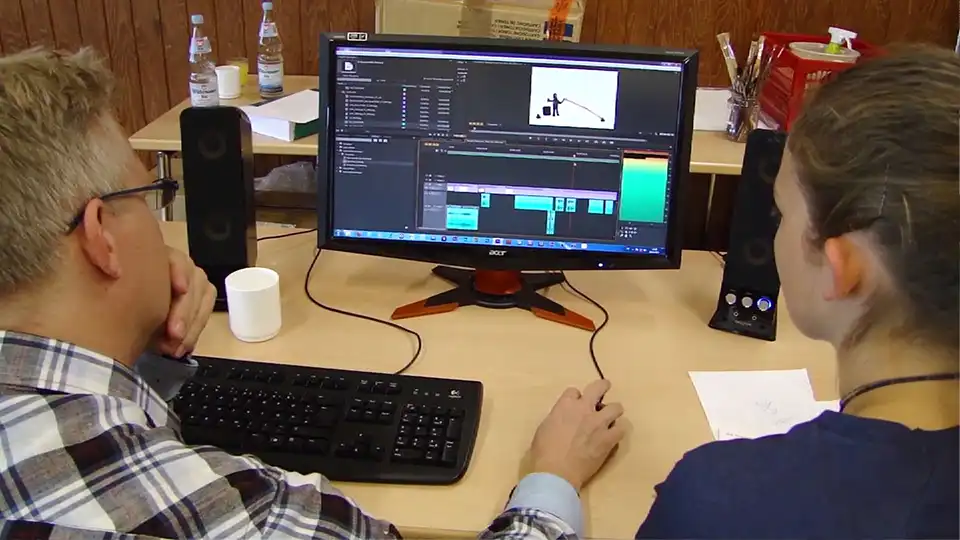
Afterwards, the recorded scenes are edited and combined with sound effects, dialogue or music. Depending on their previous experience, participants carry out these steps themselves with my guidance and support.
Making-of: A look behind the scenes of the workshop
Film by Simone Klar
Participants learn how to:
- prepare and creatively use non-drying paints,
- develop their own film ideas and bring them to life visually,
- break down movements into individual frames and control their timing,
- experiment with smearing, blending and morphing effects,
- use cameras and animation software for frame-by-frame recording,
- collaborate on animated films,
- edit their footage and add sound.